
57th LISBON International Congress on Economics, Business, Human Resources & Management: EBHRM-26


+91 9781001229, +66 62 601 8051, +351 920 619 073
+91 9781001229, +66 62 601 8051, +351 920 619 073
Full Articles/ Reviews/ Shorts Papers/ Abstracts are welcomed in the following research fields:
Economics focuses on the allocation of scarce resources and the behavior of agents (individuals, firms, and governments).
Supply and Demand Dynamics: Market equilibrium, elasticity, and consumer surplus.
Consumer Theory: Utility maximization, indifference curves, and budget constraints.
Theory of the Firm: Production functions, cost structures (fixed vs. variable), and profit maximization.
Market Structures: Perfect competition, monopoly, oligopoly, and monopolistic competition.
Game Theory: Strategic decision-making and Nash equilibrium.
Economic Indicators: GDP, Inflation (CPI/PPI), and Unemployment rates.
Monetary Policy: Central bank actions, interest rates, and money supply.
Fiscal Policy: Government spending, taxation, and public debt.
International Trade: Comparative advantage, tariffs, and trade balances.
Development Economics: Poverty cycles, human capital, and sustainable growth.
Business focuses on the practical application of economic principles to create value and generate profit.
Accounting & Finance: Financial statements (Balance Sheets, P&L), capital budgeting, and auditing.
Marketing & Sales: Market segmentation, 4Ps (Product, Price, Place, Promotion), and consumer behavior.
Operations & Supply Chain: Logistics, inventory management, and Lean Six Sigma.
Entrepreneurship: Business modeling, venture capital, and scaling.
Competitive Analysis: SWOT analysis, Porter’s Five Forces, and Blue Ocean Strategy.
Business Ethics: Corporate Social Responsibility (CSR) and ESG (Environmental, Social, Governance) criteria.
Commercial Law: Contracts, intellectual property (IP), and liability.
Management is the process of coordinating resources and people to achieve organizational goals.
Classical vs. Modern Management: From Taylorism (scientific management) to Agile and Holacracy.
Strategic Management: Long-term goal setting, mission/vision development, and execution.
Change Management: Navigating transitions, overcoming resistance, and organizational pivots.
Decision-Making Models: Rational vs. Intuitive models and Groupthink risks.
Project Management: Waterfall, Scrum, and Kanban methodologies.
Knowledge Management: Data-driven decision-making and institutional memory.
HR focuses on the lifecycle of the employee and the optimization of human capital.
Strategic Staffing: Workforce planning, recruitment, and employer branding.
Onboarding & Training: Skill-gap analysis and continuous professional development (CPD).
Succession Planning: Identifying and grooming future leaders.
Compensation & Benefits: Wage structures, equity/stock options, and non-monetary perks.
Performance Management: KPIs, OKRs (Objectives and Key Results), and feedback loops.
Employee Relations: Conflict resolution, labor unions, and workplace safety.
Diversity, Equity, and Inclusion (DEI): Cultural competency and bias mitigation.
Employee Engagement: Motivation theories, burnout prevention, and work-life balance.
Remote & Hybrid Work Design: Managing distributed teams and digital culture.
These topics sit at the intersection of two or more of the fields above:
Behavioral Economics (Econ + HR/Management): How psychological biases affect economic and workplace decisions.
Labor Economics (Econ + HR): The study of labor markets, minimum wage effects, and migration.
Industrial-Organizational Psychology (Management + HR): Applying psychological principles to improve organizational effectiveness.
Managerial Economics (Econ + Management): Using economic theory to solve business management problems.
Corporate Finance (Business + Econ): How businesses make investment and financing decisions based on market conditions.
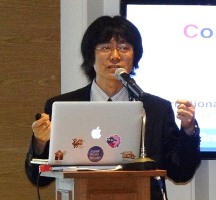
Prof. MAEDA Kazuaki

Assist. Prof. Dr. Hemantkumar P. Bulsara

Prof. Dr. Nuno Alexandre Soares Domingues

Dr.Yingthawornsuk Thaweesak