
ISTANBUL 5th International Congress on Public Administration and Civil Service: IPACS-26


+91 9781001229, +66 62 601 8051, +351 920 619 073
+91 9781001229, +66 62 601 8051, +351 920 619 073
Full Articles/ Reviews/ Shorts Papers/ Abstracts are welcomed in the following research fields:
This area covers the foundational philosophies that dictate how a government functions.
Classical Public Administration: Focusing on hierarchy, the division of labor, and the "One Best Way" (Taylorism and Weberian Bureaucracy).
New Public Management (NPM): Introducing private-sector practices into the public sector, emphasizing efficiency, competition, and performance-based results.
New Public Service: A shift toward citizen-centric governance, focusing on democratic values, public interest, and the role of the public servant as a "servant-leader."
Digital Governance (E-Government): The integration of technology to streamline service delivery and internal communication.
These topics focus on the "life cycle" of a public employee and the structure of the workforce.
Meritocracy vs. Patronage: Systems of recruitment based on objective skills versus political appointments (The Spoils System).
Civil Service Classification: Distinguishing between generalist cadres (broad skills) and specialist cadres (technical expertise).
Compensation and Benefits: Public sector pay scales, pension schemes, and non-monetary incentives.
Ethics and Accountability: Code of conduct, conflict of interest regulations, and the prevention of administrative corruption.
Performance Appraisal: Methods of evaluating public servants and the challenges of measuring "public good" versus "profit."
This is the "brain" of the administration, where decisions are formulated and evaluated.
The Policy Cycle: Agenda setting, policy formulation, adoption, implementation, and evaluation.
Decision-Making Models: Rational-comprehensive models versus incrementalism (the "science of muddling through").
Public Budgeting and Finance: Taxation, fiscal policy, resource allocation, and auditing (how the money flows).
Stakeholder Engagement: How interest groups, NGOs, and private citizens influence administrative decisions.
The legal skeleton that holds the administration together.
Constitutional Foundations: The separation of powers and the legal authority granted to administrative bodies.
Centralization vs. Decentralization: The balance of power between national, regional, and local government units.
Delegated Legislation: When administrative agencies are given the power to create specific rules and regulations.
Judicial Review: The power of courts to check the legality of administrative actions.
These areas bridge the gap between pure administration and the modern world.
Public-Private Partnerships (PPPs): Collaborative ventures for infrastructure and service delivery.
Crisis and Disaster Management: The administration’s role in handling unexpected national emergencies.
Bureaucratic Neutrality: The challenge of maintaining a non-partisan civil service while serving shifting political administrations.
Social Equity and Diversity: Ensuring the civil service reflects the demographics of the population it serves.

Prof. MAEDA Kazuaki

Assist. Prof. Dr. Hemantkumar P. Bulsara

Prof. Dr. Nuno Alexandre Soares Domingues
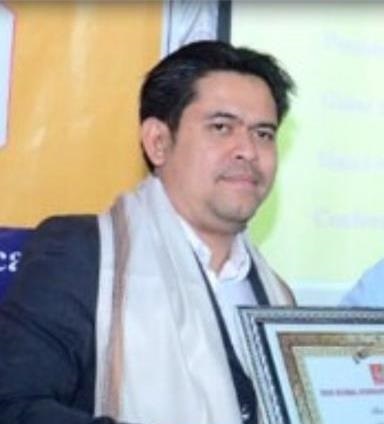
Dr. Tosaporn Mahamud.,Ph.D,

Dr.Yingthawornsuk Thaweesak